QRP Streak – K3WWP John Shannon’s Incredible Feat
Note from Publisher, W3ATB – Tim Carter: John Shannon, K3WWP, granted me permission to reprint this story about his incredible feat of making at least one QRP contact every day for over 24 years. It’s a record that may stand for many many years. I asked for his permission to reprint the story so it could be curated on at least one more website. I’ve made arrangements in my will that this website not disappear so as to allow great stories like this to endure as an inspiration for amateur operators who have not yet been born. Thanks, John, for allowing me the pleasure to post you fabulous tale.
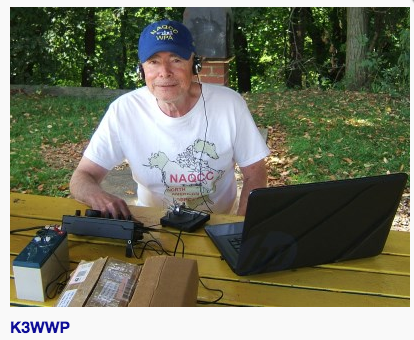
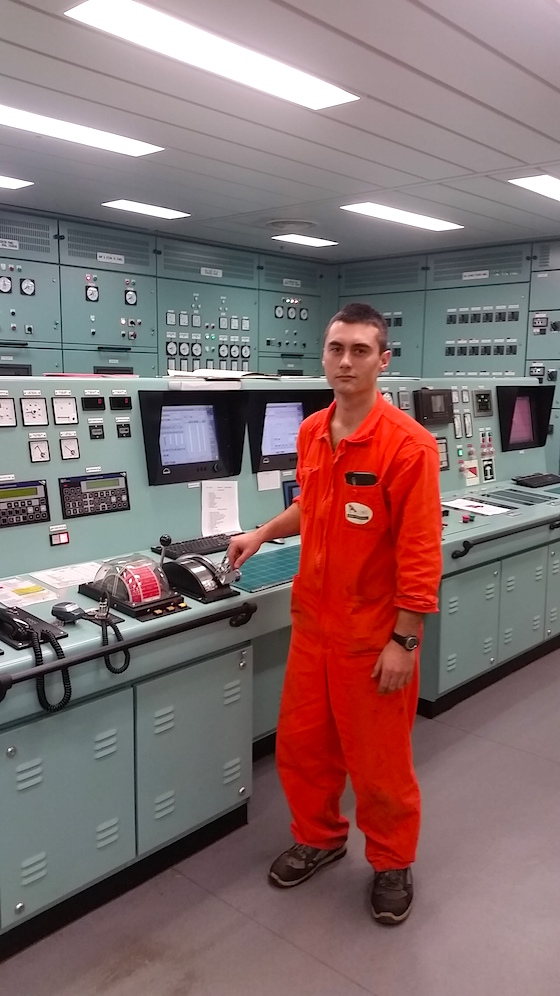
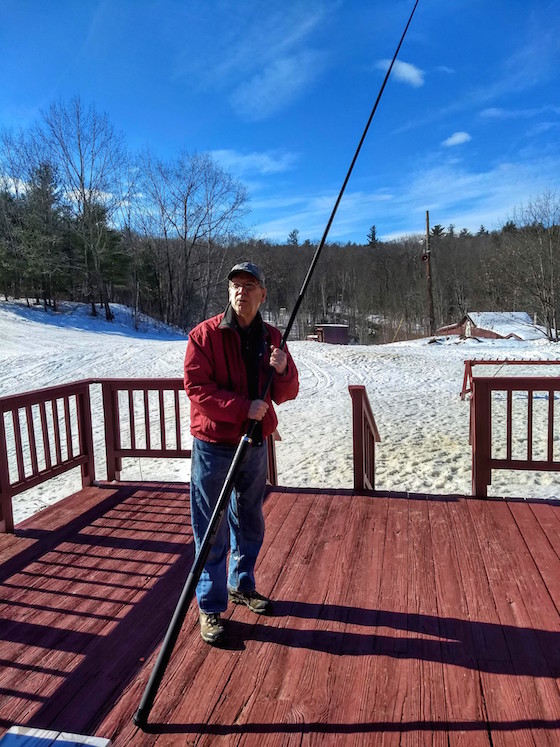
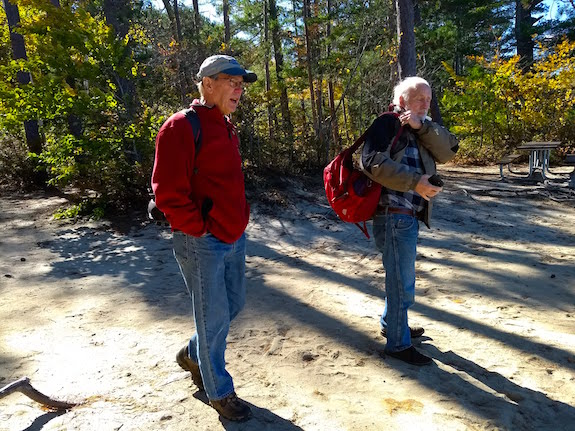
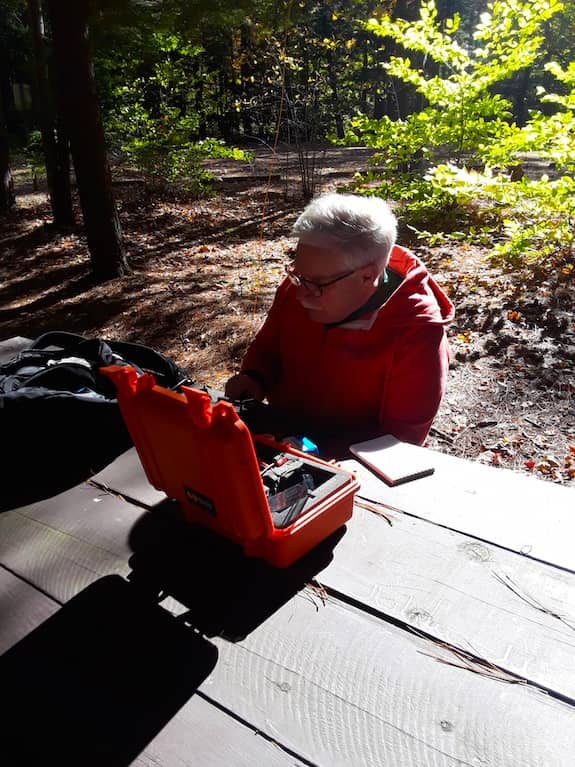
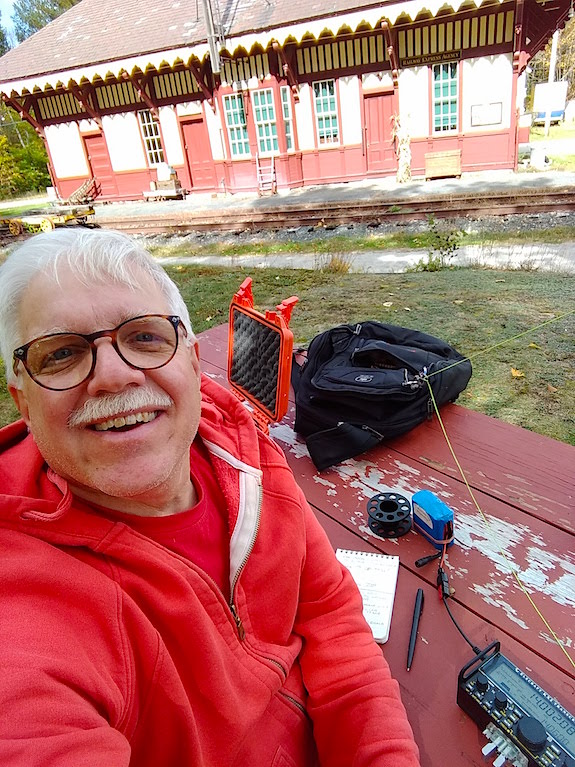
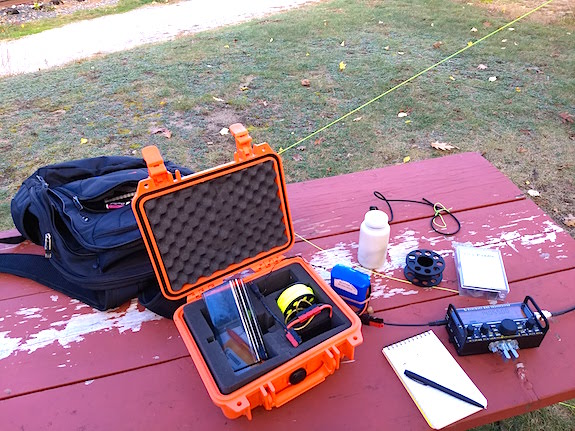
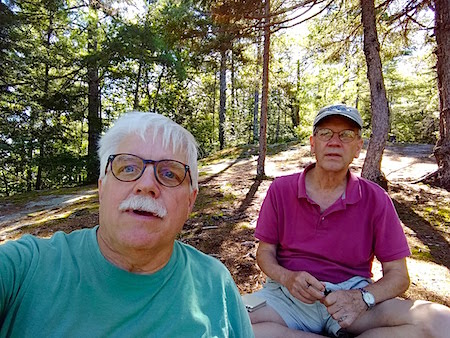
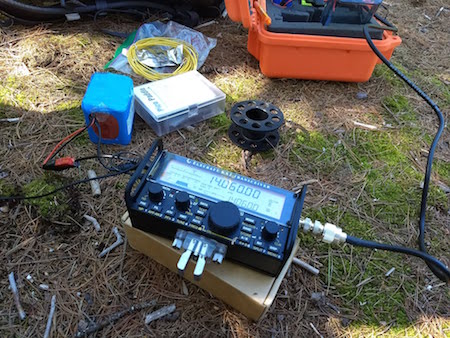
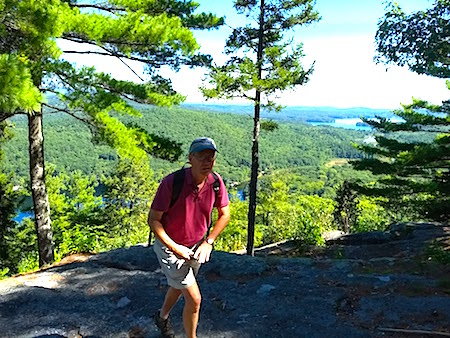
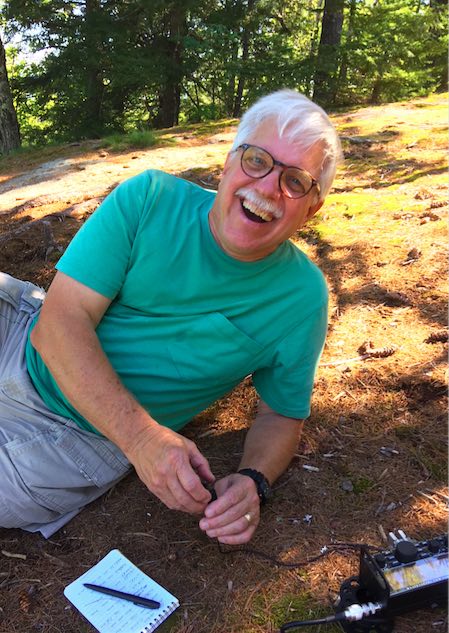
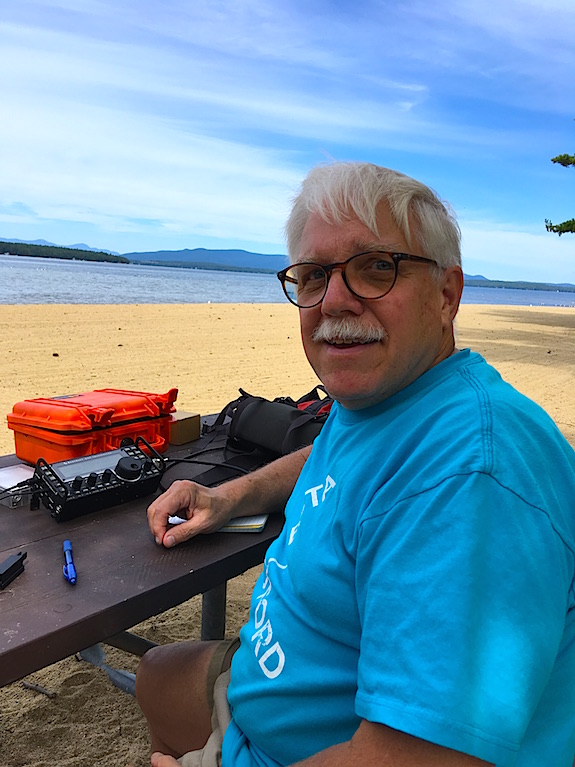
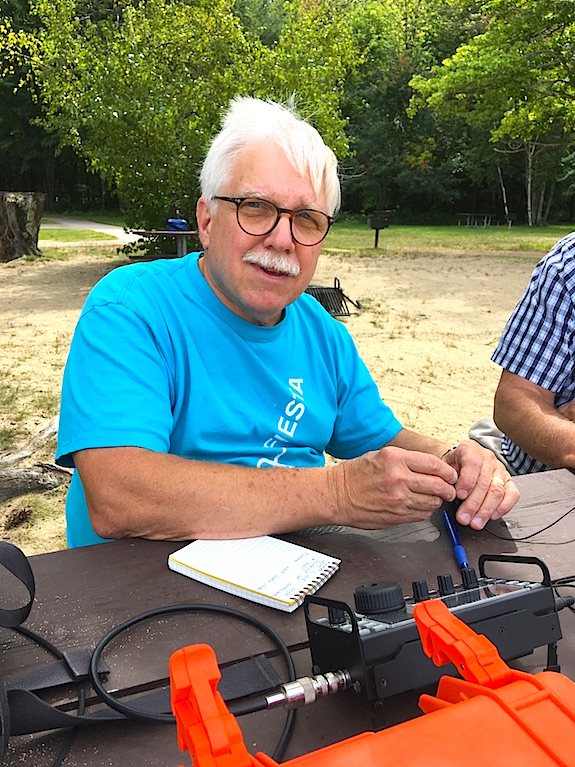
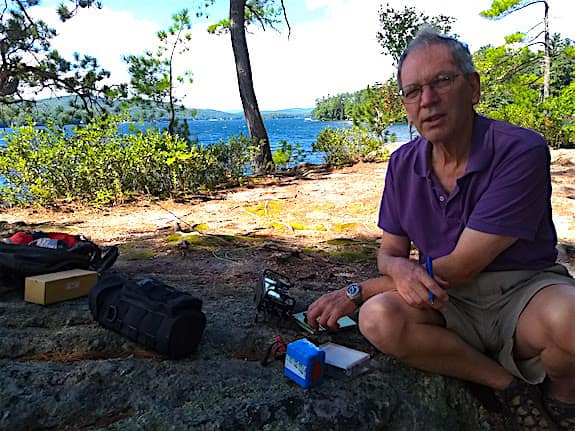
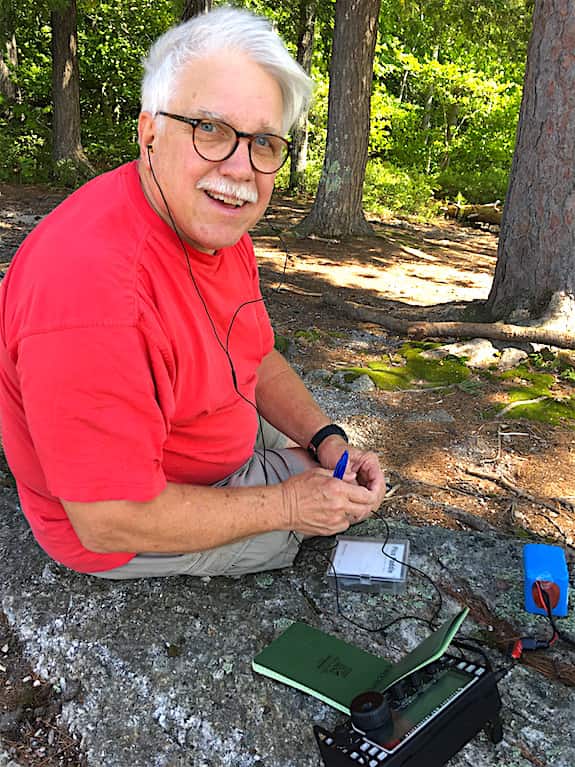
Here’s John Shannon at work extending his stunning streak.
On August 4, 2018 when I worked N1QY at 0014Z on 40 meters, my QRP/CW/simple wire antenna streak reached 24 years of age. Let’s see, that translates to 288 months or 8,766 days which means approximately 210,384 hours have passed since the streak started. Time sure passes fast. It seems like not too long ago I was excited that the streak reached 1 full year on August 4, 1995. Those 365 days doesn’t seem like much now compared to 8,766 days. It makes me feel old to think about it. I still enjoy getting that QSO each and every day though.
Perhaps this is the first time you’ve read much about the streak. I’ll start off where all stories start at the beginning and go from there. A lot of the material on this page does not need all that much updating from the previous times I’ve updated it so I’ll let a lot of it stand as it is (was), but I will update all the statistics involved.
Due to work and other reasons, I had been inactive in ham radio for about 10 years starting in 1983. Then in the early 1990s, my former next-door neighbor Eric (now KB3BFQ) who was 15 at the time expressed an interest in ham radio after seeing my collection of QSL cards and various awards I had garnered in my previous active days. We thought it would be nice to get my station together again and get back on the air so he could see firsthand what the hobby was all about.
I dug out my old gear from its resting place in the attic and the corner of my unused shack. It took a little bit of doing, but with Eric’s help, we did get it up and running again. At that time, it consisted of my homebrew transmitter originally built back in 1963 when I got my Novice license and subsequently modified several times. Originally it was a 75 watts (input) rig which probably put out about 50 watts or so. When I got back on the air a second time in the early 1980s after the first layoff of about 8 years, it was modified to about 30 watts or so input and maybe 20 or so out. I also ran other powers in that period down to 12 watts input. This third time it was resurrected as a QRP 5 watts or less output rig. That was the beginning of my operation as a QRP operator according to the current definition of 5 watts output or less for CW. Actually, when I was licensed in 1963 and for some years beyond that, the definition was 100 watts input or less. I don’t know exactly when the change in definition took place. I must also mention the receiver was an ICOM R-71A which served me faithfully for many years when I used separate transmitters and receivers.
With Eric in the shack, my first QSO of my third major period of activity took place on February 15, 1993, when I worked K3DQ in MD. That really got Eric hooked and me excited again. We continued to make QSOs including contest QSOs which Eric enjoyed very much. He would help out with some multiplier checking, a bit of spotting when he got better with Morse Code, and one other thing I remember was him using a map in the state QSO parties to track the mobiles to try to figure out what their next county would be.
The streak started around a year and a half later. It was suggested by Eric when we were in my shack talking about sports records. Many sports records are for doing something consecutively such as getting one hit or more in consecutive baseball games. That record belongs to the great “Yankee Clipper”, Joe DiMaggio, who did so in 56 consecutive games. We wondered what kind of comparable record could be attempted in ham radio, and Eric came up with the idea of making a QSO on consecutive days. It would have to be done using my minimal station setup consisting of QRP, CW, and simple wire antennas.
Looking back in my logs at the time, I found the first day going backward without a QSO was August 4, 1994, so the first QSO in the streak turned out to be with Chuck KG9N/C6A on August 5, 1994. Many years later, KG9N read about the streak on my web site and very kindly offered to send a belated QSL card to commemorate the beginning of the streak.
The rules for the streak were simple. Just make at least one QSO a day using QRP, CW, and simple wire antennas. I decided to use UTC days rather than local time days since UTC is the generally accepted system of dates and times used in ham radio. That meant my search for a QSO began each evening at 7 PM EST or 8 PM EDT which was a generally active time on the bands enabling me to make my QSO near the beginning of a day. I have gotten my streak QSO in the 0000-0200Z period on the vast majority of days.
My antennas then and now consist of a 110 foot end fed random wire for 160-30M mostly in my attic with a short extension down to my tiny backyard, a 20M dipole (flat top inverted vee to be more accurate) in the attic, a 15M vertical dipole on the side of my house also used for 17 and 12M, a 10M sloping dipole on my porch roof, and a rotatable 6M dipole in my attic. That’s it other than my occasional portable operations with NAQCC WPA Chapter members Tom WY3H, Mike KC2EGL, Tom WB3FAE, Don K3RLL, Jody K3JZD, Jon AB3RU, Ken N3CU, and others at the local Kittanning Community Park, Moraine State Park, the submarine USS Requin, Skyview Radio Society, Breezeshooters hamfest and a couple other locations. At the parks, my antenna of choice is a multi-band jumper based on a design by K3RLL. Also, I’ve experimented at the parks with a couple other antennas such as an end fed random wire similar to my random wire here at home.
Before long the streak took on extra meaning. It showed and continues to show, that a minimal setup like mine really does work, despite the skepticism of some hams who believe you must use as much power and as big an antenna as possible to work anyone, especially DX stations. It has encouraged many hams who live in situations where they can’t use high power or big antennas to get on the air anyway with their own minimal setups and enjoy this wonderful hobby. Of course, what makes the success possible is the extreme efficiency of Morse code. With other modes you may indeed need the skeptics’ QRO and big antennas to succeed, but definitely not with CW. That is the most personally satisfying aspect of the streak for me. I’m delighted it has brought happiness to so many people.
Although some days it was hard and took some time to find a QSO, the streak continued on and on. When my friend Mike, AB5XP answered my 30M CQ on April 30, 1997, that brought the streak to 1000 consecutive days.
A major change in the streak as well as in my ham radio career came on September 1, 1999. On that day I purchased a Kenwood TS-570D transceiver – the first time I had ever used a commercial transmitter, as well as being the first transceiver. As soon as I unpacked it, I did two things. I put the microphone away in a drawer where it remains lost to this day. When I turned it on, I set the power to 5 watts output where it and all my rigs have remained to this day except for 3 experimental or accidental QSO’s that I don’t count in my streak totals. I used the 570 at QRO just to see how easy it was to work DX on 80M with high power. It was so easy, there was no satisfaction to it. I learned from those 2 QSO’s what I had always known. QRP is the way to go in ham radio to derive maximum satisfaction from the hobby. Later the third ‘accidental’ QRO QSO took place as described a little further on in the story.
Conditions were then getting better and better as the sunspots were starting to increase, and more and more DX QSO’s started showing up in my log. By the time my streak reached 2000 days on January 25, 2000, when Bill, N4QA answered my 40M CQ, the bands were really alive and hopping.
My interest in ham radio suffered a blow early in 2001 when my mother passed away after a six week battle in the hospital and a nursing home. She was 95 years old, and we’d lived together for all my life. For the past several years she had been in good health but needed me at home to take care of her, which I gladly did. I did not want to see her spend her last years in some uncaring nursing home. So her passing affected me quite a bit. One of the things that happened was that I lost some of my interest in hamming. I don’t really know why, unless it was because my mom always supported my hobby and she loved looking at all the DX QSL cards I would receive, especially those from her native Italy. For most of the rest of 2001 I did not enter as many contests as usual nor did I chase as much DX as before. However, the streak still continued during all that time.
Gradually I did start to get back into the bigger contests in earnest by the end of 2001 and set personal records in such contests as the RSGB 10/15M, Ukraine DX, OK/OM, ARRL 10M, and others. Then in early 2002 I really hit some of the bigger contests quite hard. In the January NAQP, I had a rate of 51.4 for the full 10 hours of the contest. The February ARRL DX contest saw me break the 600 QSO barrier for the first time ever with 633 QSO’s (and every one passed the ARRL log checking procedure of which I am proud). I continued to set personal best marks in many other contests in 2002 even though I still was not entering as many nor putting in as many hours as I once did.
Sometime early in the 2000s, a mailman delivered some QSL cards to me. It turned out that he was also a ham radio operator, and we became fast friends. Along the way, I gained a convert to CW and QRP. Previously most of his activity had been on that phone(y) mode of SSB with higher power. Now with a few exceptions for emergency work, he is a very dedicated QRP/CW/simple wire antenna operator also. I’m talking about Mike KC2EGL who is often mentioned in my diary and who in fact, has written a few diary entries for me.
One goal was reached during the streak when I worked J45RW for my QRP country # 200 on July 27, 2002. New countries had been coming very slowly and continue to do so since I still don’t devote all that much time searching the bands for new ones. I do mean searching because I NEVER use any kind of spotting to find the stations I work. However I’m proud to have made it to 200 with just 5 watts and simple wire antennas.
When I worked several of you starting with AA1SP on October 21, 2002, that extended the streak to 3000 consecutive days. In November of 2003, my cousin Virginia whose health had been declining a bit asked me to stay with her a few days after Thanksgiving while her husband was away on a hunting trip. It happened that included the weekend of the CQWW DX contest. I thought I’d try setting up there for the contest as well as for my streak QSOs. She lived outside the river valley in which I live, and I was curious to know how conditions would be there without the surrounding hills. It turned out there was a world of difference. The QSOs came much easier there even with just a simple end fed wire about 70 feet long running down from ‘my’ bedroom to a grape arbor in their backyard. The story of the contest can be found among other contest stories in the CONTESTING section of my website so I won’t dwell more on it now except to say that my streak QSOs from 11/29 through 12/2 all came from Virginia’s house.
Now I set my sights on making it to 10 years, and on August 4, 2004, I reached that goal. Helping me complete the ten years with QSO’s on that day were: K4IR, N4CU, NB6M/MM, WE8UP, WD9F, WB5BRD, KS4OY, VE3AIJ, VA3RE, N4FI, & K3DQ (whom I realized when typing this was my first QSO when I became active again on February 15, 1993). Thanks to all of you.
About a month before the 10-year point of the streak I got a request from a reporter for the local newspaper to let him write a story about my ham radio activities for the paper. As with the start of the streak, I didn’t realize that this event would also be the start of something. It turned out the reporter was also a ham radio operator. I had read his articles in the paper, but never knew he was a ham until we talked about the article. I’m talking about Tom Mitchell, KB3LFC (now WY3H). Tom and I quickly became fast friends since his interests in ham radio were also CW, QRP, and simple wire antennas. He had been inactive and was just getting back into ham radio about that time. That was why we had never worked each other on the air despite our similar interests.
Not too long after the article was published, I again was contacted by Tom. This time he asked me if I was interested in helping him start up a new QRP club. To be honest, and Tom knows it, I thought there were too many QRP clubs already. However, Tom said this would be a QRP CW club and would place emphasis on minimal QRP operation, i.e. using simple wire antennas and only using CW, no other modes. Well, that immediately piqued my interest and I said I certainly would be interested if the club stuck to those ideals. He agreed it would, and the North American QRP CW Club (NAQCC) was born in October of 2004.
Tom was the President, and I assumed the post of VP. Although my duties with the club which included being the webmaster for the club website, processing awards and contest results, etc. took away from my on air time, that was countered by the club activities encouraging me to get on the air more. I felt the club, dubbed “The QRP Club With A Difference” was doing things that other QRP clubs were not, and I really enjoyed the club awards program, the monthly sprints, and something I think is unique, the monthly Challenges. An example of a Challenge is making 30 QSOs on 30 meters in a month. Another is to ‘get’ all 26 letters of the alphabet from the call letters of stations you work or to make up a pre-selected list of words about a certain theme in the same way. Each month we try to come up with something different but all have the bottom line of just trying to get more CW activity on the bands to help preserve this wonderful mode. If I’ve piqued your curiousity and you want to know more, visit the club website at http://naqcc.info/ and be sure to watch the video there.
Shortly (18 days) before the 11 year mark was reached, I hit 4,000 consecutive days. I had planned to work as many stations as possible that day, but the death of my cousin Virginia that very same day changed those plans. I did work VE1XW, HI8RV, WZ2T, KC0TLN, and NB9D on the 4,000th day, but I would have liked to have worked a lot more of you since so many have expressed such an interest in the streak and followed it closely over the years.
During the 12th year of the streak, my activities consisted mostly of just continuing the streak, some contesting, the aforementioned NAQCC activities, and a little DXing when conditions permitted. My DX total entities remained at 204 as limited time and poor conditions kept me from working any new ones.
In April 2008, Mike loaned me his TS-480SAT rig after he bought an Elecraft K2 as his main rig. The 480 became my main rig until October 10, 2011, and the 570 was relegated to backup or standby status for a while, and now it is on loan to Eric KB3BFQ who has resumed his ham radio activity after a layoff for a while. The 480 gave me another band to play with – 6 meters. It was on that band that my 3rd QRO QSO happened. As with the 570, the power was set to 5 watts on all bands immediately. However, Mike and I missed setting the power on one of the three 6 meter positions. So my very first QSO on 6 meters with a VE2 station was done unaware at the time by me at 100 watts. Before making another QSO there, I noticed the LED power meter was lighting up a whole lot more segments than it should, and I set the power correctly back to 5 watts. End of my QRO confessions. HI.
As the streak continued to get longer and reached the 15 year mark, it continued to provide an incentive for me to be active on the ham bands. That activity provides continued satisfaction and thrills for me.
There were many highlights as the streak continued. Among them working Desecheo Island and later Navassa Island meant I now have all NA entities worked and confirmed.
Another highlight along the way was working VK6DXI near Perth in Western Australia on 40 meters via long path while the sun still hadn’t set here. I had to email VK6DXI to find out for sure it was a legitimate QSO, and he confirmed it was. The QSL from that contact is displayed on the main page of the DX section of my web site.
Perhaps one of the biggest thrills was working Hawaii on 80 meters not once but twice, and almost three times in the 2009 ARRL DX contest. Our 50th state became my 49th state on 80 meters. I still need Alaska for an 80 meters WAS.
On October 10, 2011, I had another major change in the streak. From that day on for about a year until something even better came along, virtually all my QSOs came on an Elecraft K2 which I used on loan from Mike KC2EGL for a while, and eventually in early 2012 purchased it from him. The fantastic receiver in the K2 made a big difference in my battle against local man-made QRN. I could now dig out much weaker signals than before. I also got Mike’s KX1 and have used it for portable operations. That’s the one I helped him build as a NAQCC project back in 2008/2009.
In 2012, Mike bought a KX3, the latest at that time (and in my opinion, greatest) of the Elecraft rigs. After using his and seeing how good it was, I had to have one of my own. I purchased and assembled it in October 2012, and have used it virtually exclusively since then, even for portable operations since its small size makes it ideal for both a home rig and a portable rig. Its excellent filtering helps in eliminating my local noise as well as separating stations in crowded conditions. In fact, it is so good, it’s hard to tell there is a strong station just a few dozen Hz or less away from the station I am working. The ease of setting up for split operation when chasing DX is another great feature among many more that I won’t go into here. One thing I will add though is the computer interface which allows the firmware to be updated regularly. It’s like buying a new rig for free every so often. Also, the computer interface allowed the use of a panadapter (HDSDR) to scan the ham bands. That is a tremendous time-saver when you can look at a computer screen and immediately see all the activity on a large portion of each ham band. No more laborious tuning across the band and listening for activity. Since I started using a panadapter early in 2013, it has saved me countless hours while continuing my streak. The HDSDR was eventually upgraded to the Elecraft PX3 which was specifically designed to work with the KX3. It proved to be even better than the HDSDR. I think the KX3/PX3 combo is the absolutely most perfect QRP/CW setup in the world.
One particularly enjoyable aspect of the streak was doing what Mike KC2EGL and I christened ‘tag-team’ efforts. That is where one of us would work a station in my shack with our own call, then switch operating positions for the other one to work the same station with his call. Eventually we also simply set up dual headphones and keys to eliminate the jumping around in the faster paced contests. We did that for many contests and for working many DX stations outside contests. I’m not sure just when we started that, but it peaked in early 2013 when Mike was off work recovering from a shoulder operation.
Also in 2013, March 1 to be exact, I started a DX streak with the same qualifications as the main streak except that one (at least) QSO a day must be DX, i.e. non-W/VE. That continued until it came to an end when I couldn’t find any workable DX on August 2, 2018, just 20 days short of 2000. That streak is written up in a separate page, so no need to describe it further here.
Summing up now. All QSO’s in the streak came without any special arrangements. No skeds or regular net check-ins were involved in extending the streak. I just got on the air each day and called CQ or answered someone’s CQ for my QSO. Even if I did have a sked with someone to give them Armstrong County or some other reason, I’d always make it a point to get another random QSO that day. The readers of my web site diary tell me it would be OK to make a sked with someone to insure the streak continues, but I’m hesitant to do so. One other thing requires mention. I never signed /QRP after my call to attract attention to the fact I was using QRP. I don’t believe in doing that anyway. I’m just a normal ham operator who happens to use QRP.
I don’t know if a streak this long could be maintained under the same conditions using another mode than CW. At least I’m sure it wouldn’t be as easy. I’ve never come seriously close to missing a day, although on a few days here and there it took a lot of listening and/or calling CQ before a contact came along.
Most of the time I got that first QSO of the day during the first hour of the day. The 0100Z hour provided the second highest total. The latest time to get that first QSO was 2311Z back on 14 Feb 1995 when I worked EA8/DJ1OT on 30M. That was the only first QSO that came in the 2300Z hour. Twelve came in the 2200Z hour. Most of those late hour QSOs came before the streak was all that well established.
Now on to some statistics for the first 24 years of the streak. Notice I said the ‘first 24 years’ which means I have no intention of ending the streak just yet. It will continue to go on until some unforseen circumstance brings it to an end. I would love to make it to 25 years as I think something like “A quarter century of daily QRP/CW/simple wire antennas QSOs” would sound very nice as a tribute to the effectiveness of QRP/CW/simple wire antennas.
First a couple of notes on the stats. There are some minor discrepancies in the totals caused mainly by my not being sure about the location of /MM stations. Also, Aves Island was worked before the streak started and not since, so my overall and streak DX entity totals are one apart. All stats below are as of 08/04/18 (24 full years of the streak). Of course, it really doesn’t need saying, but everything in the stats was done using QRP or QRPp, CW, and simple wire antennas:
W/VE QSOs          -    46,103
DX QSOs            -    23,568
Total QSOs         -    69,671

W/VE Contest QSOs  -    35,274
DX Contest QSOs    -    17,466
Total Contest QSOs -    52,740

W/VE Regular QSOs  -    10,829
DX Regular QSOs    -     6,102
Total Regular QSOs -    16,931

/MM Regular QSOs   -        15
/MM Contest QSOs   -        13
Total /MM QSOs     -        28

Unique stations    -    19,483

KMPW (1000+ miles per watt) QSOs - 2,078

Most QSOs by Date:
 11/7/99 - 416 (SS)
 2/16/02 - 370 (ARRL DX)
 2/17/01 - 342 (ARRL DX)
 11/2/97 - 341 (SS)
 11/5/95 - 341 (SS)
 2/19/00 - 306 (ARRL DX)
 11/5/00 - 301 (SS)
 1/12/02 - 291 (NAQP)
 11/6/94 - 285 (SS)
11/27/99 - 283 (CQWW DX)

States worked: All 50

Most often worked:
Pennsylvania - 3,686
Wisconsin -    2,295
Illinois -     2,221
California -   2,179
Virginia -     2,041

Least often worked:
Wyoming -      62
North Dakota - 73
Idaho -        92
Nebraska -     96
Nevada -       97

QSOs by Continent:
North America - 50,478
Europe -        15,534
South America -  1,978
Africa -           738
Asia -             592
Oceania -          323
Antarctica -        18

Countries worked: 224 (225 counting Aves Is. worked before the streak started)

Most often worked of the 224 (excluding W/VE):
Germany - 1,901
Italy -   1,125
England -   895
Slovenia -  894
Hungary -   871

Top Countries by Continent:
EU - Germany -     1,901
NA - Puerto Rico -   427
SA - Aruba -         349
AF - Canary Is. -    250
AS - Japan -         241
OC - Hawaii -        230

CQ Zones worked: 36 (need 22, 24, 26, 28)

Most often worked CQ Zones:
 4 - 21,770
 5 - 20,593
15 -  7,449
14 -  6,543
 3 -  3,789
 8 -  3,139

Percent of QSOs that were DX by year:
1994 - 10.7
1995 -  9.3
1996 -  5.9
1997 - 13.6
1998 - 30.4
1999 - 37.0
2000 - 54.5
2001 - 55.3
2002 - 50.0
2003 - 31.3
2004 - 29.9
2005 - 19.2
2006 - 15.0
2007 - 12.0
2008 -  6.7
2009 -  7.5
2010 - 11.3
2011 - 36.5
2012 - 42.1
2013 - 61.0
2014 - 67.5
2015 - 75.2
2016 - 51.9
2017 - 42,4
2018 - 57.1 (Through August 4)

QSOs by Band:
 40 - 18,627
 20 - 14,781
 80 - 11,450
 15 -  8,939
 10 -  7,020
 30 -  3,889
160 -  3,409
 17 -  1,068
 12 -    421
  6 -     39
 60 -     28

QSOs with 5 watts -           67,789

QSOs <5 watts and >1 watt -      371

QSOs with 1 watt or less -     1,511


Significant number of days in the streak and the ham(s) I worked those days:

Day             Date       Worked (band)
0001            08/05/94 - KG9N/C6A (30,40), FS/DL8WAA (40)
0365 (1 yr)     08/04/95 - VE3LOE/3, N5ION (17), KG8IT (40), W8RJW (30)
0500            12/17/95 - K4HPP, KE4AUN (30), VF5AAD (17), NG3H (160)
0731 (2 yrs)    08/04/96 - 68 stations in NAQP contest
1000            04/30/97 - AB5XP (30)
1096 (3 yrs)    08/04/97 - KB0RGU (40), K1AF (30)
1461 (4 yrs)    08/04/98 - KB0JTS (20)
1500            09/12/98 - W2BJ (30)
1826 (5 yrs)    08/04/99 - WN9U (40), 9A0DX (20)
2000            01/25/00 - WA3WSJ, N3AO (80), N6NF (15)
2192 (6 yrs)    08/04/00 - K4PTU (40), 6W/DK8YY (20)
2500            06/08/01 - AA3CT (40)
2557 (7 yrs)    08/04/01 - WJ4P, IT9ESW (30)
2922 (8 yrs)    08/04/02 - 45 stations in NAQP contest
3000            10/21/02 - 29 stations (various)
3287 (9 yrs)    08/04/03 - KN4PR (30)
3500            03/04/04 - N1PVP (40)
3653 (10 yrs)   08/04/04 - 11 stations (20,30,&40)
4000            07/17/05 - VE1XW, HI8RV, WZ2T, KC0TLN, and NB9D
4018 (11 yrs)   08/04/05 - VE3GXU, KB3LFC
4383 (12 yrs)   08/04/06 - WA2VQV, VA3RKM, VA3CBE, W3PM, and KB2JWD
4500            11/29/06 - N2JJE (160)
4748 (13 yrs)   08/04/07 - 83 stations in NAQP contest
5000            04/12/08 - WA8REI, W2JEK, W9ILF, WB4YZA, KB9BIT, W4HAY, N1WSD, N0NBD
5114 (14 yrs)   08/04/08 - K0KP, NS9I, N1BUG, WY3H, NN0Q, K4LRX
5479 (15 yrs)   08/04/09 - WD4EKB
5500            08/25/09 - KA4RUR, WY3H
5844 (16 yrs)   08/04/10 - WY3H, N1EAV, N9SKN
6000            01/07/11 - K1IEE, KQ1P, W8LQ, AF4LV, KF8R, N2ESE, WA8REI, W4QO, W2JEK, WY3H
6209 (17 yrs)   08/04/11 - V44KAO, S52F, W2BPI
6500            05/21/12 - KW9R, K7M, CP4BT, HA4FF
6575 (18 yrs)   08/04/12 - AF4PD plus 108 NAQP QSOs
6940 (19 yrs)   08/04/13 - 57 NAQP QSOs plus EO73U
7000            10/03/13 - K4JPN, WP4L, K8JD, K3PSD, N5GW
7305 (20 yrs)   08/04/14 - F5PLC, VE1OMI
7500            02/15/15 - PA6NB, PI4A
7670 (21 yrs)   08/04/15 - KD5ZLB, HT7C
8000            06/29/16 - OK1CF, WD4EXI
8036 (22 yrs)   08/04/16 - KE2YK, AA2VG, F6ARL, HC2AO
8401 (23 yrs)   08/04/17 - K3NLT, P4/DF4XX, VE3OU
8500            11/11/17 - W0N, ZF9CW
8766 (24 yrs)   08/04/18 - N1QY

Highlights of the Streak:

1994:
Aug  5    First QSO of the streak - worked KG9N/C6A 30M
Aug  6    First USA QSO after 5 DX QSO's - AA9JY
Aug  6    First Europe - UR4QBL 40M
Aug 18    First South America - OA4FW 30M
Aug 31    Worked YV4DDT - Venezuela on 40M for entity # 25 in the streak
Sep  9    First Africa - ZD8OK 30M
Oct 20    Worked HB0/HB9L - Liechtenstein on 15M for entity # 50 in the streak
Dec 23    KB3BFQ received his ham ticket - he was the one who suggested the streak idea to me.
Dec 28    Worked KB3BFQ on 10M - My first 10M QSO ever

1995:
Jan 16    First of 17 straight days with one or more DX QSOs (DX #1 Streak)
Jan 18    First Oceania - KH6AK 40M
Feb 14    34 minute rag chew with EA8/DJ1OT
Feb 15    Worked K3KLC in MD on 160M - My first 160M QSO ever
Feb 17    Worked 9A3MA - Croatia on 40M for entity # 75 in the streak
Jun 28    Worked K0OSW in MN on 12M - My first 12M QSO ever
Jul 30    Worked RW0A - Asiatic Russia on 20M for entity # 100 and first Asia

1996:
Jan 24    Worked P49I with 70 mW on 30M
Feb 20    Worked LU6Z - South Orkney Is. on 30 for entity # 110 in the streak
Mar 16    Worked EA6BH with 500 mW on 30M
Apr  6    First Antarctica - EM1KA 30M
May 10    VK6HQ answered my CQ on 30M - most distant QSO of the streak
Jun 12    Worked W4HG in NC on 10, 12, 15, 17, 20, 30, 40, & 80 meters in 31 minutes
Nov 24    Solar Flux rises to 100 for the first time during the streak
Nov 24    JA3ZOH & JH0ZHQ show up in my log - My first Japanese QSOs

1997:
Mar 27    Worked R1ANF - South Shetland Is. on 30M for entity # 120 in the streak
Oct  6    Worked RA9CKQ to complete 15M WAC
Nov  2    Near clean sweep in the SS - missed YT & NE
Nov 30    Worked WAC in a single day within 5h 22m
Nov 30    Worked MJ0AWR - Jersey on 15M for entity # 130 in the streak

1998:
May  1    Worked 4Z5AX - Israel for entity # 140 in the streak
Nov 28    Worked 5V7A - Togo on 20 for entity # 150 in the streak

1999:
Jun 19    VK6HQ again answers my 30M CQ
Aug 26    Worked NH6D/KH3 - Johnson Is. on 30M for entity # 160 in the streak
Sep  1    Purchased a Kenwood TS-570D after many years of wanting a xcvr
Sep  1    First QSO with the Kenwood was KO1C on 40M
Nov  4    Worked EA8CN to complete 17M WAC
Nov  7    Busiest day with 416 QSO's
Nov  7    537 QSOs in the SS - My most QSOs ever in a test
Nov 23    First of 81 straight days with some DX worked (DX #2A Streak)
Nov 27    Busiest DX day with 273 DX QSOs
Nov 27    Worked CT3BX to complete 10M WAC
Nov 27    Worked 25 JAs in a couple hours
Nov 28    500 QSOs in the CQWW DX test - Best DX test ever
Nov 28    6V6U on 15M is country # 100 with my new Kenwood
Nov 30    Worked 5C8M to complete 12M WAC

2000:
Jan  1    Worked my friend of 30+ years, VA3RJ for first QSO of the 2000s
Feb 11    UA0ABK worked - 81 straight days with a DX QSO
Feb 13    After missing DX on the 12th, started a new DX streak with KG4KO (DX #2B Streak)
Feb 19-20 512 DX QSOs in the ARRL DX test
Mar  4    Worked JT1DA - Mongolia on 15M for entity # 170 in the streak - First zone 23 QSO
Mar 18    Worked country # 100 in the year 2000 - VP2VI
Mar 21    Made 23 DX QSOs including new countries EX2X and SV0LK
Apr 21    WAC in 6 straight QSOs on 5 bands - RV9CP-20M, VK4XA-17M, UX1MM-10M, W5UJA-15M, YV6AZC-12M, EA8ALP-20M
May 22    100th straight day with a DX QSO - RA2FBC + others
Jun 20    Worked 5H3RK - Tanzania on 20 for entity # 180 in the streak - First zone 37 QSO
Jul 15    154th straight day with a DX QSO - FP/AI5P
Aug 10    Worked OY/DL5YLM - Faroe Is. on 20M for entity # 185 in the streak
Nov 25    Worked JX7DFA - Jan Mayen on 10M for entity # 190 in the streak

2001:
Jan  1    Lots of fun as usual in the ARRL SKN event
Jan 13    457 QSOs in the NAQP - best contest rate at 46.9/hr
Feb 17    558 QSOs in the ARRL DX test - most QSO's ever in a test

2002:
Jan 12    514 QSOs in the NAQP - best contest rate at 51.4/hr
Feb 16    633 QSOs in the ARRL DX test - most QSO's ever in a test
Feb 16    Worked 5U9C - Niger on 15M for entity # 195 in the streak
Nov 24    Worked S9MX - Sao Tome & Principe on 20M for entity # 200 in the streak
Dec  4    Worked 4J6ZZ - Azerbaijan on 15M for entity # 201 in the streak

2003:
Jan 11    Second year in a row with a 51+ hourly rate in the NAQP
Feb  1    Approximately when conditions begin to decline from the superb propagation of the past 3-4 years
Feb 16    DF0LI is my QSO #1,000 with Germany in the streak
Nov 29-30 Worked the CQWW DX contest portable from my cousin's house.
Nov 30    Worked SU9NC - Egypt on 10M for entity # 202 in the streak
Dec 27    Best ever RAC contest with 222 QSOs

2004:
Jan 10    Declining conditions show up with 109 less QSOs in NAQP
Feb 21-22 367 QSOs in ARRL DX - down from 633 just 2 years ago
Mar 14    Best ever WIQP with 143 QSOs

2005:
May 28    Worked 4L8A - Georgia on 20M for entity # 203 in the streak
May 30    Worked Hoot Owl Sprint in field with KB3LFC

2006:
May 29    Second time in the field in the streak - Hoot Owl Sprint w/ KB3LFC
Jun  2    For the third time VK6AU (ex-VK6HQ) answers my 30M CQ
Aug 25    Have a QSO with WA8REI 40 years to the day after our first QSO
Dec 16    4J6ZZ's QSL card makes 198 countries verified

2007:
Feb 18    Worke 5Z4/9A3A - Kenya on 20M for entity # 204 in the streak
Aug  2    5Z4/9A3A's QSL card makes 199 countries verified
Oct 10    I win my 14th NAQCC sprint - SWA category

2008:
Jan 28    Worked W0BH in Kansas to complete Kansas all bands 160-10M
Feb  6    OH0R's QSL card makes 100 countries verified on 40 meters
Apr  3    The 45th anniversary of my Novice ticket - KN3WWP
Apr 14    KC2EGL loans me a Kenwood TS-480SAT which becomes my main rig
Apr 29    Workde FJ/DJ2VO - St. Barthelemy on 30M for entity # 205 in the streak
Jun 29    First ever 6 meter QSO - W0GKP - MN first state worked on 10 bands
Aug 12    First 6 meters QSL received - WY3H - PA 1st state veried 10 bands

2009:
Feb 15    Worked K5D - Desecheo Is. on 30M for entity # 206 in the streak
Feb 16    First QSO with KC2EGL's KX-1 built as a NAQCC project
Feb 22    KH6MB is new state (#49), new country, new zone, new continent on 80 meters
May  1    KH6MB's QSL card received to verify on 80M state #49, first Oceania, first zone 31
Jul 26    VK6DXI worked in daylight (8PM EDT) via long path on 40 meters
Aug  2    W9TTT is unique station #15,000 in streak
Aug 18    Got KL7J on 30 to complete 30 meters WAS - finally

2010:
May  1    The beginning of a mW 'streak within a streak' (mW Streak)
Aug 15    Worked 403A - Montenegro on 20M for entity # 207 in the streak
Oct 19    Worked PJ6A - Saba/St. Eustatius on 30M for entity # 208 in the streak
Nov 28    Worked PJ22 - (New) Curacao on 15M for entity # 209 in the streak

2011:
Feb  7    The beginning of a multi-QSO per day streak (2 QSOs Streak)
Feb 19    Worked PJ4A - (New) Bonaire on 80M for entity # 210 in the streak
Feb 19    Worked T30YA - West Kiribati on 40M for entity # 211 in the streak
Mar 19    Worked R0QA and RW0CWA with mW to complete mW WAC
Mar 27    The beginning of a DX streak that lasted 120 days (DX #3 Streak)
Jun 25    10 and 6 meters open for Field Day - 82 QSOs in 31 states on 10
Jul  3    Made 14 QSOs in a portable N3AQC op with KC2EGL and K3RLL (tot 14) at Kittanning Community Park
Jul 21    Last day of mW QSO Streak - 447 days
Jul 24    Last day of DX #3 Streak - 120 days
Oct 10    My first QSO using what would become my K2 when purchased later from Mike KC2EGL
Nov 14    Worked MU0FAL for overall band-entity # 1,000 (pre-streak and streak)
Nov 19    Worked VE4WI for last province for NAQCC WAVE award
Nov 26/27 Made 296 DX QSOs in 93 countries in the CQ WW DX contest
Nov 28    Worked PJ4/K4BAI for entity # 100 on 12 meters

2012:
Mar 16    Worked PJ7PT - Sint Maarten on 30M for entity # 212 in the streak
May 26/27 Made 291 DX QSOs in the CQ WPX contest
Jun  7    Worked D3AA - Angola on 20M for entity # 213 in the streak
Jun 24    Worked NI0DX in NE to complete NAQCC mW WAS and Elecraft WAS

2013:
Feb-Apr   Tag team contests (16) with KC2EGL including the first two below
Feb 16    324 QSOs in the ARRL DX contest
Mar 16    108 QSOs in the Russian DX contest - personal best in that contest
Mar  1    DX #4 Streak begins with IK2SND on 17M
Mar 31    Worked T2YY - Tuvalu on 15M for entity # 214 in the streak
Apr  3    The 50th anniversary of my Novice ticket - KN3WWP
Apr 13    Worked A71CM - Qatar on 20M for entity # 215 in the streak
May 11    Worked Z81X - South Sudan on 15M for entity # 216 in the streak
Jun 22    257 QSOs as part of a N3AQC multi-op FD operation with KC2EGL and K3RLL at the QTH of WY3H in Garretts Run, PA
Aug  3    222 QSOs (20/15M only) in the NAQP
Aug 28    Worked 5T0JL - Mauritania on 20M for entity # 217 in the streak
Oct 19    106 QSOs in the WAG contest - personal best in that contest
Nov 16    45 QSOs in the LZ DX contest - personal best in that contest
Nov 23    421 QSOs in the CQWW DX contest

2014:
Feb 15    480 QSOs in the ARRL DX contest - most in a contest in several years.
Feb 28    DX Streak #4 reaches 1 year - 365 days with D44CF - Cape Verde on 20M
Mar 27    Worked TX6G - Austral Islands on 10M for entity # 218 in the streak
Apr 12    74 QSOs in the GA QSO Party a new personal record for that contest
Jun 28    213 QSOs in a portable FD operation from my front porch as N3AQC with KC2EGL (75)
Jul 23    DX Streak #4 reaches 500 days with EI/SP3CW - Ireland on 20M
Jul 23    Worked W1AW/9 - Indiana for state # 49 from W1AW/# in 2014 leaving only Maine to work
Aug 27    Worked W1AW/1 - Maine to complete the W1AW/# WAS in 2014
Oct  1    Added the Elecraft PX3 panadapter to my station
Nov 29/30 Made 381 QSOs in the CQWW DX contest
Nov 30    Worked 3B8MU - Mauritius on 20M for entity # 219 in the streak
Nov 30    Worked AH0K - Marianas Islands on 15M for entity # 220 in the streak

2015:
Feb  9    Worked K1N - Navassa Island on 20M for entity # 221 in the streak - Completes all NA enitities
Feb 12    Worked S01WS - Western Sahara on 30M for entity # 222 in the streak
Feb 21    Made 449 QSOs in the ARRL DX contest
Feb 28    DX Streak #4 reaches 2 years - CO8LY on 15 + T77C, UA3KW, YO3APJ, SP9LJD, and OR5T
Jun 27/28 Made 253 QSOs in FD with KC2EGL and WB3FAE (tot 309) using N3AQC at Chicora, PA
Jul 22    Received plaque for working W1AW portable from all 50 states during 2014
Jul 28    Gave a QRP/CW presentation at the Skyview Radio Society - New Kensington, PA
Nov 10    Gave a QRP/CW presentation at the Butler County ARA meeting with KC2EGL and WB3FAE helping out
Nov 24    DX Streak #4 reaches 1,000 days with PJ2/KB7Q - Curacao on 40M
Nov 25    Made 14 QSOs from the sub USS Requin in Pittsburgh as NY3EC with Mike KC2EGL (15)
Nov 28/29 Made 254 QSOs in the CQWW DX contest

2016:
Feb 20/21 Made 303 QSOs in the ARRL DX contest
Feb 28    DX Streak #4 reaches 3 years - HI3TEJ on 40
May 28    Worked 5W1SA - Samoa on 15M for entity # 223 in the streak
May 28    Worked KH8/KC0W - American Samoa on 15M for entity # 224 in the streak
Jun 25/26 Made 617 QSOs in FD with KC2EGL and WB3FAE using N3AQC at Chicora, PA
Jun 25/26 My share was 382 QSOs on 40M - probably the most single band QSOs I've made
          in a contest other than some 10M contests
Jul 1-6   Worked all 13 Colonies stations plus WM3PEN - Received nice certificate in a couple weeks
Jul 31    Made 34 QSOs with Mike KC2EGL (35) as N3AQC in the FOBB from Kittanning Community Park - won first place overall
Aug 21    Made 52 QSOs from Moraine State Park with Mike KC2EGL (0) and Tom WB3FAE (19) in the Skeeter Hunt
          & NPOTA (TR04) activation as N3AQC
Nov 26/27 Only 76 QSOs in the CQWW DX contest

2017:
Feb 18/19 Made 214 QSOs in 120 multipliers in the ARRL DX Contest
Feb 28    DX Streak #4 reaches 4 years - PJ7AA on 30
Apr  8    DX streak #4 reaches 1,500 days with 6Y5WJ - Jamaica on 17M
Apr 12    Made 64 QSOs in our NAQCC sprint - Most ever
Jun 24/25 Made 381 QSOs in FD from my front porch as N3AQC with Mike KC2EGL (110) - total of 491 QSOs, 44 states, 5 provinces, 2 DX
Jul 1-6   For the second year in a row, I worked all 13 Colonies stations plus WM3PEN - Received nice certificate in a couple weeks
Jul 30    Made 42 QSOs with Mike KC2EGL (10) in the FOBB from Kittanning Community Park
Aug 20    Made 37 QSOs on 40 in the Skeeter Hunt from Kittanning Community Park (with Mike KC3EGL and Tom WB3FAE)
Aug 27    Made 20 QSOs from the Skyview club house radio room (with KC2EGL, WB3FAE, AB3RU, W3FFZ and K3JZD)
Sep 24    Made 12 QSOs from the USS Requin (with Mike KC2EGL)
Oct  9    Made 34 QSOs from my home in the NAQCC anniversary celebration (with Mike KC2EGL)

2018:
Feb 9     I worked Bill W9ZN in Chicago for QSO # 90,000 in my 55 years of hamming.
Feb 17/18 Only 116 QSOs in the ARRL DX Contest. Lowest total in several years.
Feb 28    DX Streak #4 reaches 5 years - 6Y5WJ on 40
Apr 3     The 55th anniversary of my Novice ticket - KN3WWP
Jun 3     Operated the Museum Ships on the Air activity from NY3EC, the USS Requin moored in Pittsburgh, with Mike KC2EGL and Art WA3BKD (sub caretaker).
          This was an independent activity and we used QRO power to make as many QSOs as possible for the Requin's results in the event.
Jun 23/24 Field Day with Mike from my front porch. We made 482 QSOs total.
Jul 1-6   For the third year in a row, I worked all 13 Colonies stations plus WM3PEN - Received nice certificate in a couple weeks
Aug 2     For the first day since Feb 28, 2013 I failed to work a DX station ending my DX streak at 1,980 days.

Significant QSO Numbers In The Streak:
             ALL QSOs            DX QSOs
QSO #     DATE    CALL        DATE    CALL
 1,000  10/09/94  NM9C       2/16/97  LP3E
 2,000  12/12/94  8P9GE      7/19/98  C6A25FV
 3,000   3/19/95  N4MM       2/20/99  EA4TX
 4,000   6/25/95  W9OFR     10/09/99  OX3FV
 5,000   9/04/95  WB8IJN     2/13/00  KG4KO
 6,000  11/05/95  N2CKZ      5/28/00  OH9W
 7,000   1/13/96  N4BP      12/09/00  GM3POI
 8,000   5/05/96  KB9LRP     3/17/01  UA3AGW
 9,000   8/13/96  N1WMG     12/23/01  DL8BDF
10,000  11/03/96  W9LT       5/05/02  IR4T
11,000   1/12/97  K2WK      12/21/02  9A5W
12,000   5/25/97  P40W       2/22/04  TM6X
13,000  10/05/97  N6AA       2/19/06  OH6AC
14,000  11/09/97  WB3KVR     2/20/11  V48M
15,000   1/11/98  N8BJQ      3/03/12  VP2MSN
16,000   5/03/98  KN4Y/M     2/16/13  C6AKQ
17,000   8/01/98  K4LQ       6/28/13  HA3FTA
18,000  10/18/98  W9LNQ     12/14/13  OQ5M
19,000  12/14/98  IZ1BPR     5/24/14  YL2KO
20,000   2/21/99  EA3AR     12/14/14  E7DX
21,000   5/30/99  WX4CW      5/31/15  OE3K
22,000   9/05/99  K7KU       4/09/16  4A1DX
23,000  11/06/99  N0AT      10/21/17  GB8OPW
24,000  11/28/99  DA0FF
25,000   1/08/00  K3WW
26,000   3/12/00  K9KL
27,000   8/03/00  W8PNS
28,000  11/12/00  OL0E
29,000  12/31/00  IK2EAD
30,000   2/17/01  M0C
31,000   8/11/01  S58A
32,000  12/15/01  NA7NA
33,000   1/20/02  HA9RC
34,000   3/16/02  LY7Z
35,000   7/14/02  HG0HQ
36,000  12/15/02  JA7YQV
37,000   2/15/03  V31YN
38,000  11/30/03  9A1P
39,000   1/25/04  N2CU
40,000   9/18/05  N8WBI
41,000   2/08/05  K5NZ
42,000   8/02/05  WN1B
43,000  12/26/05  WB2FXK
44,000   6/14/06  W3DP
45,000   1/13/07  K3WU
46,000   7/14/07  N9FC
47,000  12/02/07  KB8U
48,000   6/02/08  AF2Q
49,000  11/20/08  N1LU
50,000   8/01/09  KV8Q
51,000   4/14/10  N3IK
52,000   2/03/11  WA3VAT
53,000   6/15/11  K4NP
54,000  11/26/11  ND2C
55,000   3/26/12  K0GZX
56,000   8/05/12  EA4DRV
57,000  12/08/12  AK4JA
58,000   2/20/13  K9ZMU
59,000   7/29/13  GV4BUW
60,000  11/21/13  WG8Y
61,000   2/15/14  JA7NVF
62,000   5/24/14  G5O
63,000  11/29/14  SN2M
64,000   2/21/15  IR4X
65,000   9/02/15  SP2GWH
66,000   2/24/16  YN7SU
67,000  10/12/16  AA0FD
68,000   5/04/17  WB3BBY
69,000   1/26/18  WA8REI
To reiterate, the purpose of my giving all this information about my streak is simply to show anyone who reads this that QRP does work well, even with simple wire antennas and a less than average location, especially with CW. If you are in a situation where you can’t use high power or put up huge antennas, maybe my results will encourage you to get on the air with a simple setup and give it a try. I guarantee that you will succeed and be able to enjoy the finest of all hobbies. Give it a try – you may never go QRO again.